 In Stock
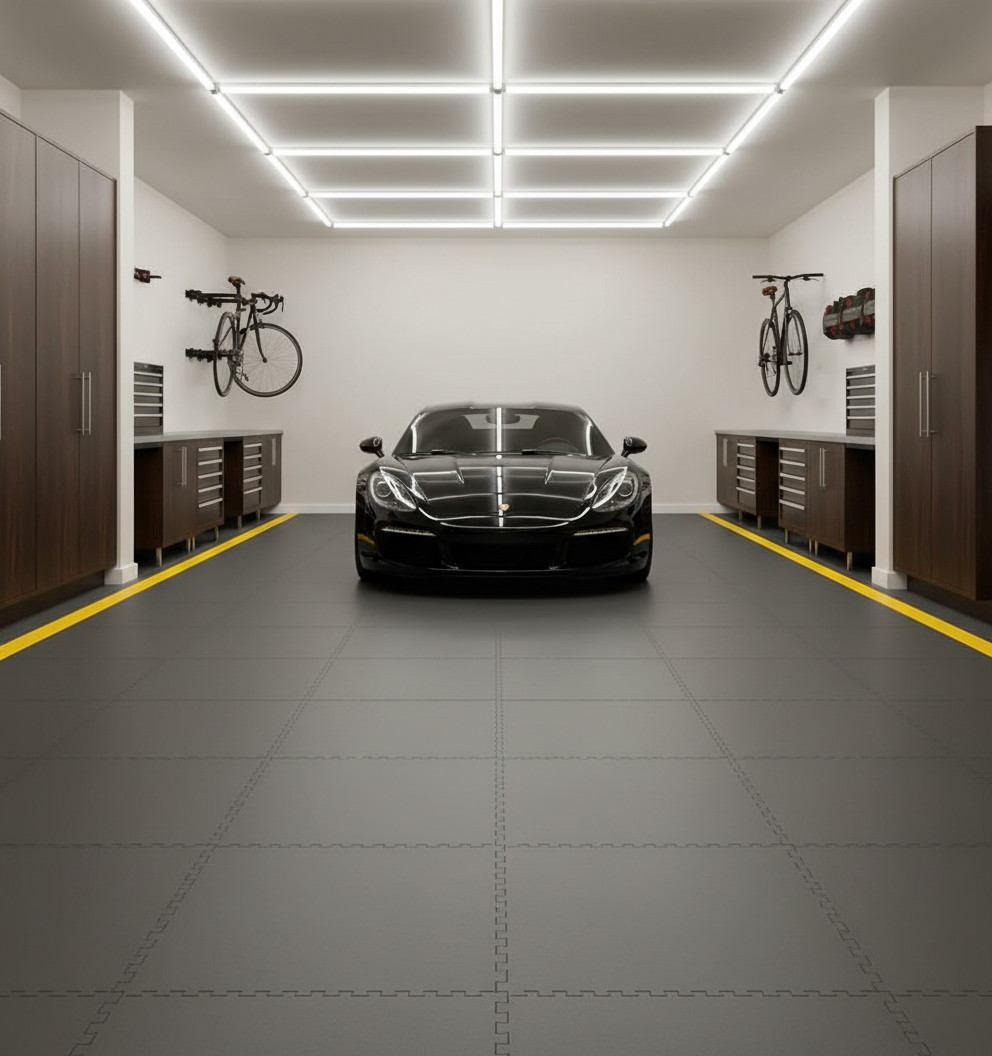
10mm PVC Floor Tiles Ultra Heavy Duty | Interlocking Garage & Workshop Flooring | 500x500mm 5 Tonne Load Rating UK
Garage Flooring UK
Description
Heavy-Duty 10mm PVC Floor Tiles – Engineered for Garage and Workshop
When garage and workshop environments demand flooring that withstands heavy loads, chemical exposure, and continuous traffic, these 5 tonnes rated interlocking PVC tiles deliver verified performance that standard flooring cannot match. Designed specifically for professional environments where operational reliability is non-negotiable.
** 5 tonnes Load Rating** | ** Oil & Chemical Resistant** | ** Zero Cure Installation** | ** 10-Year Commercial Warranty** | ** Free UK Delivery**
Technical Specifications
Tile Dimensions 500mm × 500mm (4 tiles per m²)
Thickness 10mm
Load Rating 5 tonnes point load (independently verified)
Material Virgin PVC, closed-cell construction
Surface Finish Anti-slip textured (R10 rated to DIN 51130)
Fire Rating Bfl-s1 (EN 13501-1 compliant)
Chemical Resistance Oils, fuels, brake fluid, coolant, acids, solvents
Temperature Range -20°C to +60°C continuous use
Weight 2.5kg per tile
Connection System Precision interlocking – no adhesive required
Warranty 10 years commercial use
Understanding the 5 Tonnes Load Rating
Our 5 tonnes point load rating means these tiles withstand concentrated weight from vehicle jacks, heavy equipment, and industrial machinery without compression failure or permanent deformation.
This rating is independently verified to BS EN ISO 24344, measuring resistance to concentrated loads through a 10mm diameter indentor. Testing documentation is available for insurance and HSE compliance requirements.
What Point Load Rating Actually Means
Point load differs from distributed load. A 5 tonnes point load means the tile can support 5 tonnes concentrated on a single small point – such as a trolley wheel, jack stand, or equipment foot. This is the most demanding load scenario and provides the true measure of tile strength.
Practical Applications
Vehicle lift pads and hydraulic jack points – Direct contact with concentrated weight
Heavy equipment and machinery bases – Static loads from industrial equipment
Rolling loads from trolleys and carts – Continuous movement across surface
Static loads from racking and storage systems – Long-term compression resistance
Rolling Load Capacity
Beyond point load, these tiles support rolling loads of 20+ tonnes – meaning fully-loaded pallet trucks, forklifts, and even HGVs can operate safely. The closed-cell PVC construction distributes weight evenly, preventing localised compression damage.
Material Science: Why Virgin PVC Outperforms
Our tiles use 100% virgin PVC in closed-cell construction – here's why this engineering choice matters for your garage and workshop:
Virgin PVC vs Recycled
Recycled PVC contains unknown additives and degraded polymer chains that reduce chemical resistance and load performance. Virgin material delivers consistent, documented specifications with predictable long-term performance. Every batch meets identical standards.
Closed-Cell vs Open-Cell Construction
Closed-cell construction creates complete fluid barrier protection. Open-cell structures absorb fluids over time, leading to swelling, odour retention, and structural degradation. Our tiles remain impermeable throughout their 20+ year lifespan.
PVC vs Polypropylene
Polypropylene tiles become brittle in cold temperatures and offer lower chemical resistance. PVC maintains flexibility and performance from -20°C to +60°C – critical for unheated garage and workshop spaces in UK winters.
PVC vs Epoxy Coatings
Epoxy requires 72+ hours cure time, professional application, and fails on damp substrates. PVC tiles install immediately, require no curing, and perform on any hard subfloor. Damaged sections replace in minutes rather than requiring full floor refinishing.
PVC vs Rubber
Rubber offers good impact absorption but degrades faster with oil exposure and UV light. PVC provides superior chemical resistance, longer lifespan, and better cost-per-year economics for garage and workshop applications.
UK Commercial Compliance
Fire Rating: Bfl-s1 Classification
Our tiles carry Bfl-s1 fire classification to EN 13501-1 – the European standard for construction product fire performance:
B: Limited contribution to fire spread (second-highest rating after A)
fl: Flooring-specific classification
s1: Minimal smoke production
This rating satisfies Building Regulations for commercial premises and meets insurance specifications for industrial applications. Documentation available for compliance audits.
Slip Rating: R10 Anti-Slip Surface
Our textured surface achieves R10 rating to DIN 51130 – the German standard for measuring slip resistance on inclined surfaces with oil contamination:
-
Safe walking surface at inclination angles of 10-19°
-
Suitable for areas with occasional water or oil contamination
-
Meets HSE requirements for commercial environments
-
Maintains grip even when contaminated with oil films
Load Testing: BS EN ISO 24344
All load ratings independently verified to British/European standards. Test certificates available for HSE inspections, insurance requirements, and building control sign-off.
Chemical Resistance Testing
Tested for resistance to common garage and workshop chemicals including engine oil, transmission fluid, brake fluid, coolant, diesel, petrol, battery acid, and industrial degreasers. Full resistance data sheets available on request.
Applications & Use Cases
Garage and Workshop: These tiles are specifically engineered for the demands of garage and workshop environments, handling the unique combination of loads, chemicals, and traffic patterns these facilities generate.
Verified Applications
Commercial garages and workshops – Vehicle service bays, MOT testing centres
Warehouse and distribution centres – Forklift traffic, pallet storage
Factory and production floors – Manufacturing environments, assembly lines
Vehicle maintenance facilities – Fleet workshops, HGV depots
Fire stations – Appliance bays, equipment storage
Aircraft hangars – Aviation maintenance, jet fuel exposure
Industrial storage areas – Heavy racking, chemical storage
Engineering workshops – Machine shops, precision manufacturing
Installation Guide: Zero Downtime Floor Transformation
Unlike epoxy systems requiring 72-hour cure times, our interlocking tiles install directly over existing floors during operational hours.
Installation Process
Preparation: Sweep floor clean. No grinding, priming, or moisture testing required.
Starting Point: Begin in corner, working outward. Leave 5mm expansion gap at walls.
Connection: Align tiles and press down firmly – interlocks click together without tools.
Cutting: Score with utility knife and snap. No power tools required.
Edge Finishing: Install ramp edges for smooth transitions where required.
Subfloor Compatibility
Installs over concrete (any age), existing tiles, painted floors, even slightly uneven surfaces up to 3mm variation. No substrate conditioning required.
Time Estimate
Two people can install 50m² in approximately 2-3 hours. No specialist skills required.
Comparison: PVC Tiles vs Alternatives
Factor PVC Interlocking Epoxy Coating Resin Floor Paint
Installation Time Hours 3-7 days 3-5 days 2-3 days
Cure/Downtime Zero 72+ hours 48+ hours 24+ hours
DIY Possible Yes No No Limited
Moisture Tolerance Excellent Poor Moderate Poor
Repair Method Replace tiles Grind & recoat Patch Repaint
Reversible Yes No No No
Cost Analysis & ROI
Initial Investment
At £21.50 per tile (£86 per m²), a typical 20m² garage costs approximately £1,720 including delivery.
Total Cost of Ownership
Over 20 years, PVC tiles cost approximately £4.30 per m² per year. Compared to epoxy (re-application every 5-7 years) or paint (annual touch-ups), interlocking tiles deliver the lowest lifetime cost.
Hidden Savings
Zero downtime: No lost productivity during installation
DIY installation: No contractor costs
Spot repairs: Replace individual tiles, not entire floor
Relocatable: Take your floor if you move premises
Maintenance & Cleaning
Routine Cleaning
-
Sweep or blow off loose debris daily
-
Mop with standard floor cleaner or degreaser weekly
-
No sealing, waxing, or special treatments required
Heavy Contamination
Pressure washing safe up to 100 bar. Industrial degreasers can be used without surface damage.
Stain Removal
Oil and chemical spills wipe clean immediately. Closed-cell construction prevents absorption – fluids stay on surface for easy cleanup.
Long-Term Care
No re-coating, re-sealing, or refinishing required throughout 20+ year lifespan. Simply clean and use.
Environmental & Sustainability
100% recyclable: End-of-life tiles can be recycled into new products
20+ year lifespan: Reduces replacement waste
No VOCs: Safe installation with no harmful emissions
No adhesives: Eliminates chemical bonding agents
Relocatable: Reuse when moving premises
Frequently Asked Questions
What load rating do these tiles support?
These tiles have a verified 5 tonnes point load rating to BS EN ISO 24344, suitable for vehicle jacks, heavy equipment, and industrial machinery. Rolling load capacity exceeds 20 tonnes.
Can I install over existing concrete without preparation?
Yes. Simply sweep clean and lay directly. No grinding, priming, or moisture testing required. The rigid structure bridges minor imperfections up to 3mm.
How long does installation take?
A 50m² area takes 2-3 hours with two people. No specialist tools required – tiles click together by hand, and cutting requires only a utility knife.
Are these tiles oil and chemical resistant?
Yes. Closed-cell PVC construction provides complete barrier protection against oils, fuels, brake fluid, coolant, and industrial chemicals. Fluids stay on surface for easy cleanup.
What's the difference between 7mm and 10mm thickness?
Both provide excellent load ratings. 10mm offers additional impact absorption and anti-fatigue properties for heavy industrial use. 7mm suits lighter commercial applications.
Do these tiles meet fire safety regulations?
Yes. Bfl-s1 rated to EN 13501-1, satisfying Building Regulations for commercial premises and typical insurance requirements for industrial flooring.
What happens if a tile gets damaged?
Simply replace the individual tile in under 2 minutes. Lift surrounding edges, remove damaged tile, click in replacement. No contractors or curing required.
Are these tiles slippery when wet or oily?
No. R10 slip resistance rating to DIN 51130 means the textured surface maintains safe grip even when contaminated with water, oil, or coolant.
Can I drive vehicles over these tiles?
Absolutely. Our tiles are engineered for vehicle traffic including cars, vans, HGVs, and forklifts. The 5 tonnes rating ensures no compression damage from any standard vehicle.
Do you offer free samples?
Yes! We offer free samples so you can see and feel the quality before you buy. Visit our Free Samples page to request yours.
Related Products
Helpful Resources
** The Ultimate Guide to Garage Floor Tiles**
Everything you need to know about choosing, installing, and maintaining garage floor tiles.
** Tile Coverage Calculator**
Enter your garage dimensions and get an instant quote with pricing.
Calculate how many tiles you need →
** Free Samples**
Check the quality and colour before you buy.
More from Garage Flooring UK
View all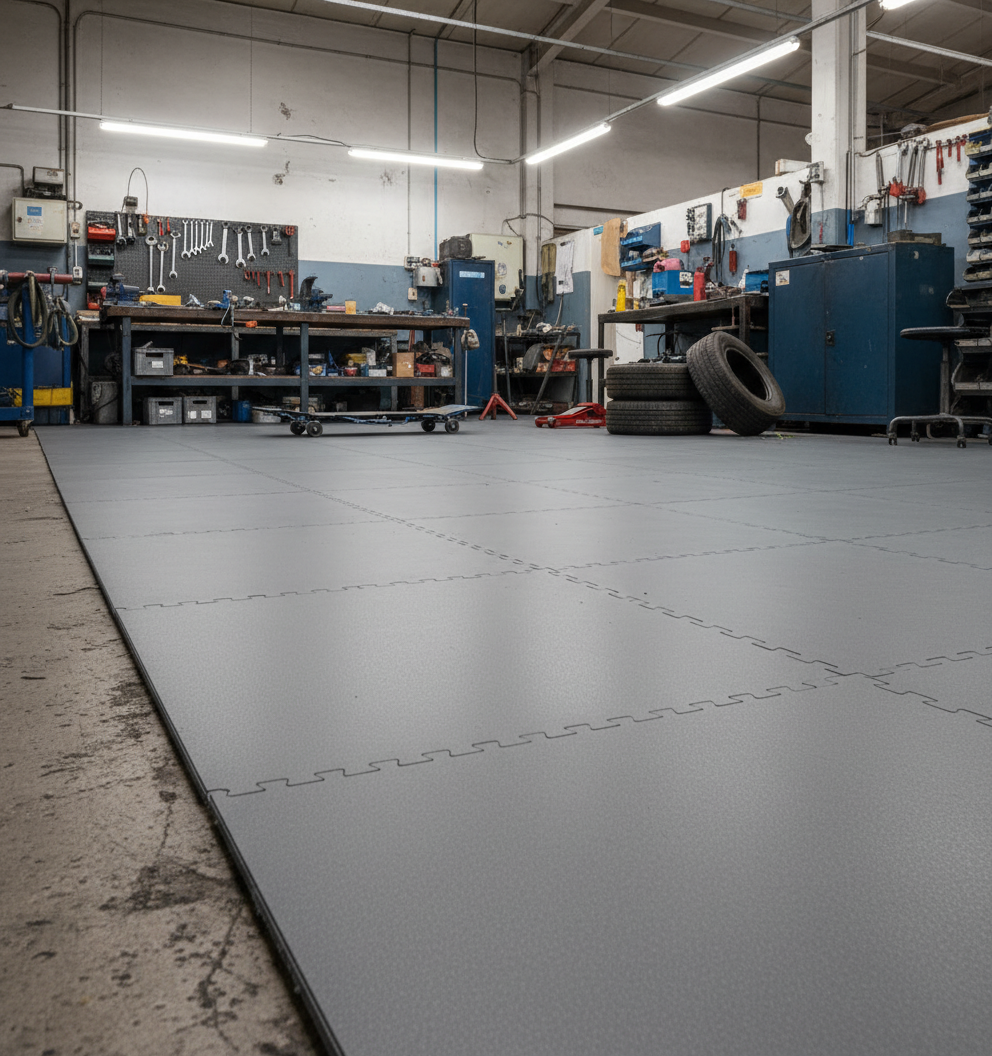 In Stock-20%
Heavy-Duty Concrete Overlay Tiles - 20 Tonne Rated
GarageFlooringUK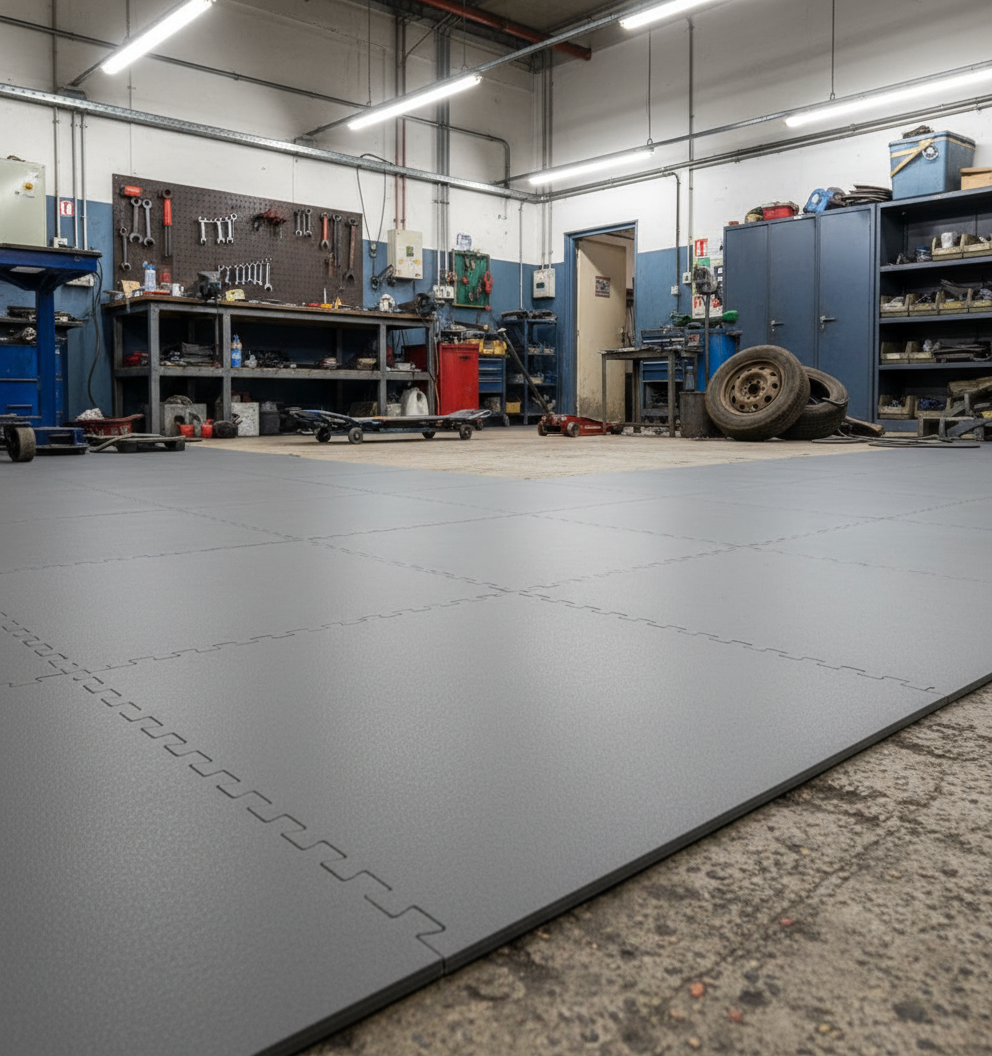 In Stock-20%
Industrial Concrete Cover Tiles - Damaged Floor Solution
GarageFlooringUK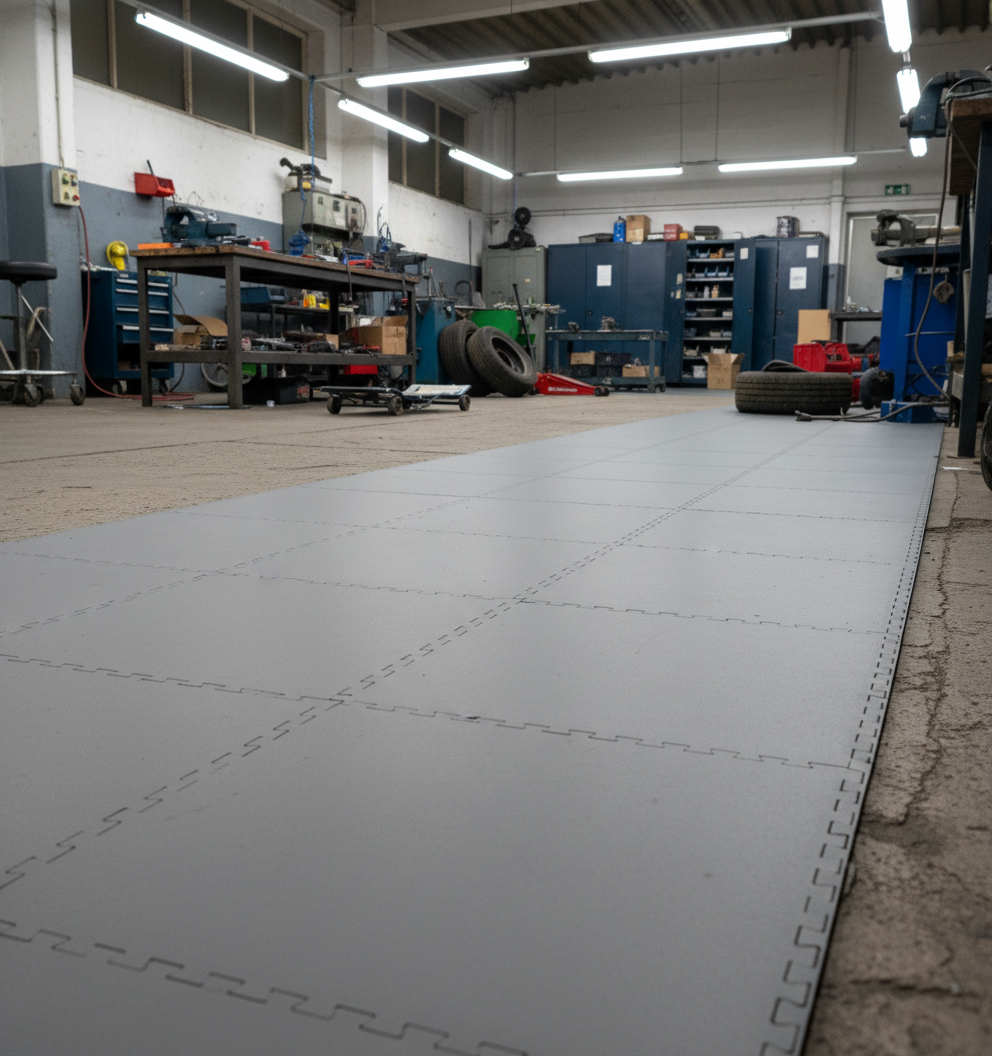 In Stock-20%
Concrete Floor Covering Tiles - Direct Overlay System
GarageFlooringUK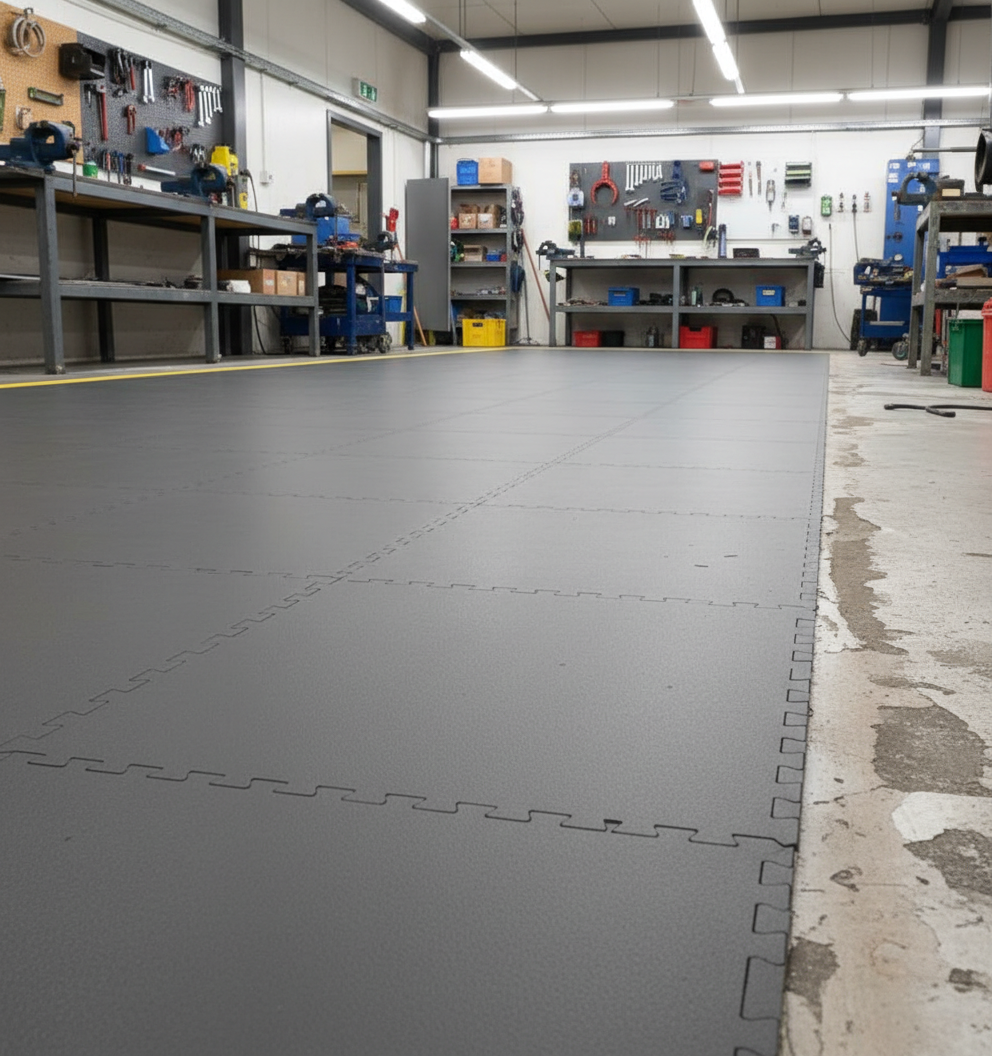 In Stock-20%