 In Stock
7mm ESD Anti-Static Interlocking PVC Floor Tiles | BS EN 61340 Compliant | Server Rooms & Electronics | UK Stock
garageflooringuk.co.uk
Description
ESD Anti-Static Floor Tiles – BS EN 61340 Compliant Protection
Protect sensitive electronics, components, and equipment from electrostatic discharge with these BS EN 61340 compliant anti-static floor tiles. Engineered for server rooms, electronics manufacturing, data centres, and any environment where static electricity poses a risk to equipment or operations.
** BS EN 61340 Compliant** | ** Controlled Static Dissipation** | ** Zero Downtime Installation** | ** 10-Year Warranty** | ** Free UK Delivery**
Technical Specifications
Tile Dimensions 500mm × 500mm (4 tiles per m²)
Thickness 7mm
ESD Classification Static Dissipative (BS EN 61340-5-1)
Surface Resistance 10⁶ to 10⁹ ohms
System Resistance < 10⁹ ohms (when grounded)
Material Conductive PVC compound
Surface Finish Anti-slip textured (R10 rated)
Fire Rating Bfl-s1 (EN 13501-1)
Connection Interlocking with grounding capability
Warranty 10 years
Understanding ESD Protection
What Is Electrostatic Discharge?
ESD occurs when static electricity accumulated on a person or object suddenly discharges to a lower-potential surface. Voltages as low as 100V can damage sensitive electronic components – yet humans don't feel discharge below 3,000V. You can destroy components without knowing it.
How ESD Tiles Protect
Our tiles provide controlled static dissipation:
Surface resistance 10⁶-10⁹ ohms: Prevents static accumulation on floor surface
Body voltage generation: Minimised through controlled conductivity
Grounding path: When connected to earth, static drains safely away
Consistent performance: ESD properties maintained throughout tile lifespan
BS EN 61340: UK/European ESD Standard
Our tiles comply with BS EN 61340-5-1 – the British/European standard for protection of electronic devices from electrostatic phenomena.
What Compliance Means
Tested & verified: Surface and system resistance independently measured
Classification: Static Dissipative (not merely antistatic)
Documentation: Test certificates available for audits and compliance
Consistent: Every tile meets specification
Static Dissipative vs Conductive vs Antistatic
Type Resistance Application
Conductive < 10⁶ ohms Explosive environments
Static Dissipative 10⁶ - 10⁹ ohms Electronics, server rooms
Antistatic 10⁹ - 10¹² ohms General static reduction
Our tiles are Static Dissipative – the appropriate classification for electronics protection.
Applications
Server Rooms & Data Centres
Protect servers, networking equipment, and storage systems. ESD events can cause immediate failures or latent damage that reduces equipment lifespan.
Electronics Manufacturing
PCB assembly, component handling, and quality control areas. Protect work-in-progress and finished products from static damage.
Repair & Service Centres
Computer repair, phone repair, and electronics servicing. Protect customer equipment during diagnosis and repair.
Clean Rooms
Pharmaceutical, semiconductor, and precision manufacturing. ESD tiles complement other contamination control measures.
Control Rooms
Industrial control systems, SCADA environments, and monitoring centres. Protect sensitive control equipment from static events.
Installation for ESD Performance
Grounding Requirements
For optimal ESD protection, tiles should be grounded:
Grounding strips: Install copper grounding strips beneath tiles at intervals
Earth connection: Connect strips to building earth point
Testing: Verify system resistance after installation
Installation Without Grounding
Tiles still provide significant static reduction without grounding through their surface resistance properties. Grounding maximises protection for highest-sensitivity applications.
Standard Installation Process
-
Sweep floor clean
-
Install grounding strips if required
-
Lay tiles with interlocking edges
-
Cut edge tiles with utility knife
-
Connect grounding to earth
-
Test system resistance
Compliance Documentation
We provide documentation for:
-
BS EN 61340 test certificates
-
Surface resistance measurements
-
System resistance verification
-
Fire rating certificates (Bfl-s1)
-
Material safety data sheets
Documentation supports customer audits, insurance requirements, and regulatory compliance.
Maintenance for ESD Performance
Cleaning Requirements
Use ESD-safe cleaners: Standard cleaners may leave residue affecting conductivity
Avoid wax or polish: Coatings can insulate the surface
Regular cleaning: Dust and debris can affect surface resistance
Periodic Testing
For critical environments, periodic resistance testing verifies continued ESD performance. Test equipment and procedures available from ESD specialists.
Cost Analysis
ESD flooring investment protects far more valuable equipment:
Single server failure: £5,000 - £50,000+
Manufacturing defects: Warranty costs, reputation damage
Data loss: Potentially catastrophic business impact
ESD tile cost is minimal compared to equipment at risk.
Frequently Asked Questions
What is the difference between ESD and antistatic flooring?
ESD (Static Dissipative) flooring has controlled resistance of 10⁶-10⁹ ohms, providing reliable static dissipation for electronics protection. Generic "antistatic" products may have higher resistance (10⁹-10¹²) that's insufficient for sensitive equipment.
Do these tiles need to be grounded?
Grounding maximises ESD protection and is recommended for critical environments like server rooms. Tiles still provide significant static reduction without grounding through their surface resistance properties.
Are these tiles BS EN 61340 compliant?
Yes. Our tiles meet BS EN 61340-5-1 requirements for static dissipative flooring. Test certificates are available for compliance documentation and audits.
Can I install ESD tiles myself?
Yes. The tiles interlock like standard PVC tiles. For grounded installations, basic electrical knowledge is helpful for connecting grounding strips to earth, or consult an electrician.
How do I maintain ESD performance?
Use ESD-safe floor cleaners (avoid wax or polish), keep floors clean of dust and debris, and conduct periodic resistance testing for critical environments.
What colour options are available?
ESD tiles are typically available in grey or black. Contact us for current colour availability and to discuss your specific requirements.
Can these tiles be used in clean rooms?
Yes. ESD tiles complement clean room environments. The smooth, cleanable surface supports contamination control while providing static protection.
Do you provide test certificates?
Yes. BS EN 61340 compliance certificates, surface resistance test data, and fire rating documentation are available for customer audits and compliance requirements.
How long do ESD properties last?
ESD properties are integral to the tile material, not a surface treatment. With proper maintenance, ESD performance is maintained throughout the 20+ year tile lifespan.
Can I get samples for testing?
Yes. Free samples available for evaluation and resistance testing. Visit our Free Samples page or contact us directly.
Related Products
Helpful Resources
** The Ultimate Guide to Garage Floor Tiles**
Everything you need to know about choosing, installing, and maintaining garage floor tiles.
** Tile Coverage Calculator**
Enter your garage dimensions and get an instant quote with pricing.
Calculate how many tiles you need →
** Free Samples**
Check the quality and colour before you buy.
More from Garage Flooring UK
View all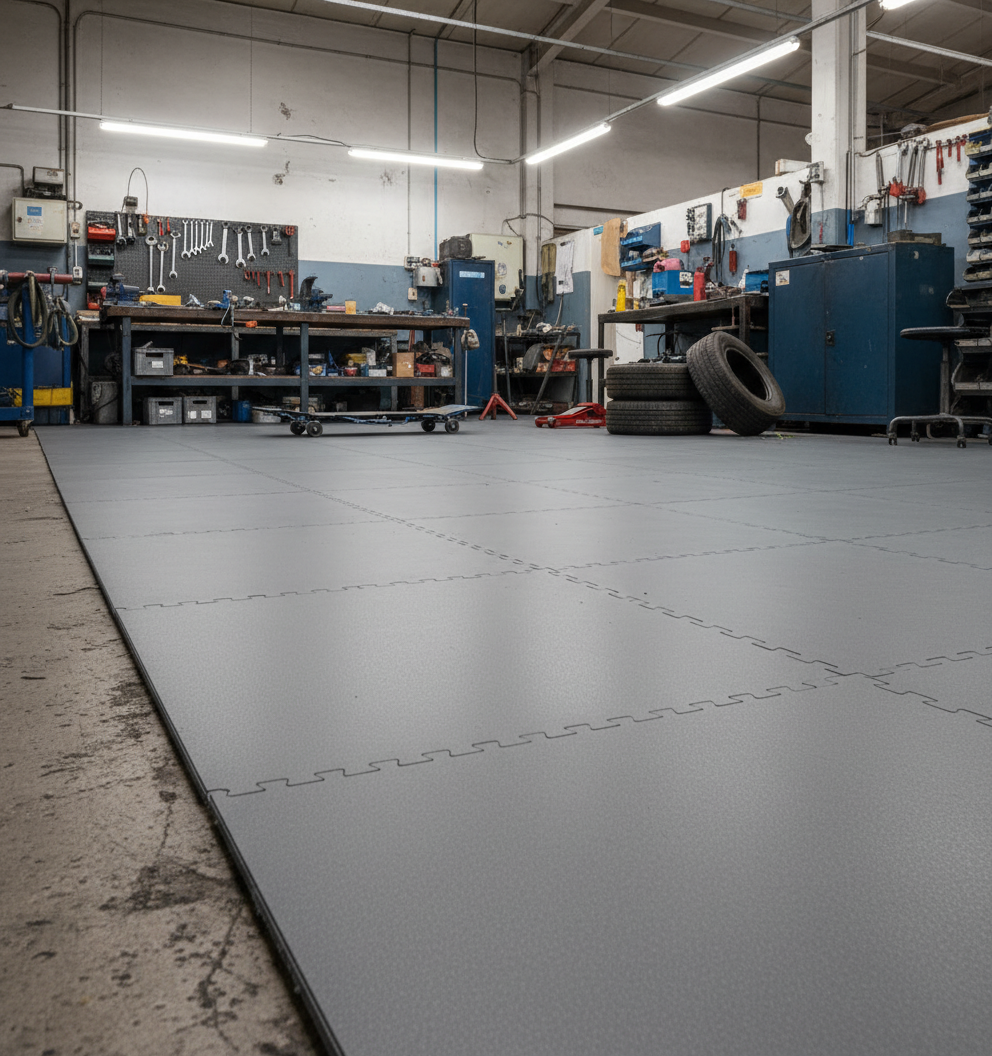 In Stock-20%
Heavy-Duty Concrete Overlay Tiles - 20 Tonne Rated
GarageFlooringUK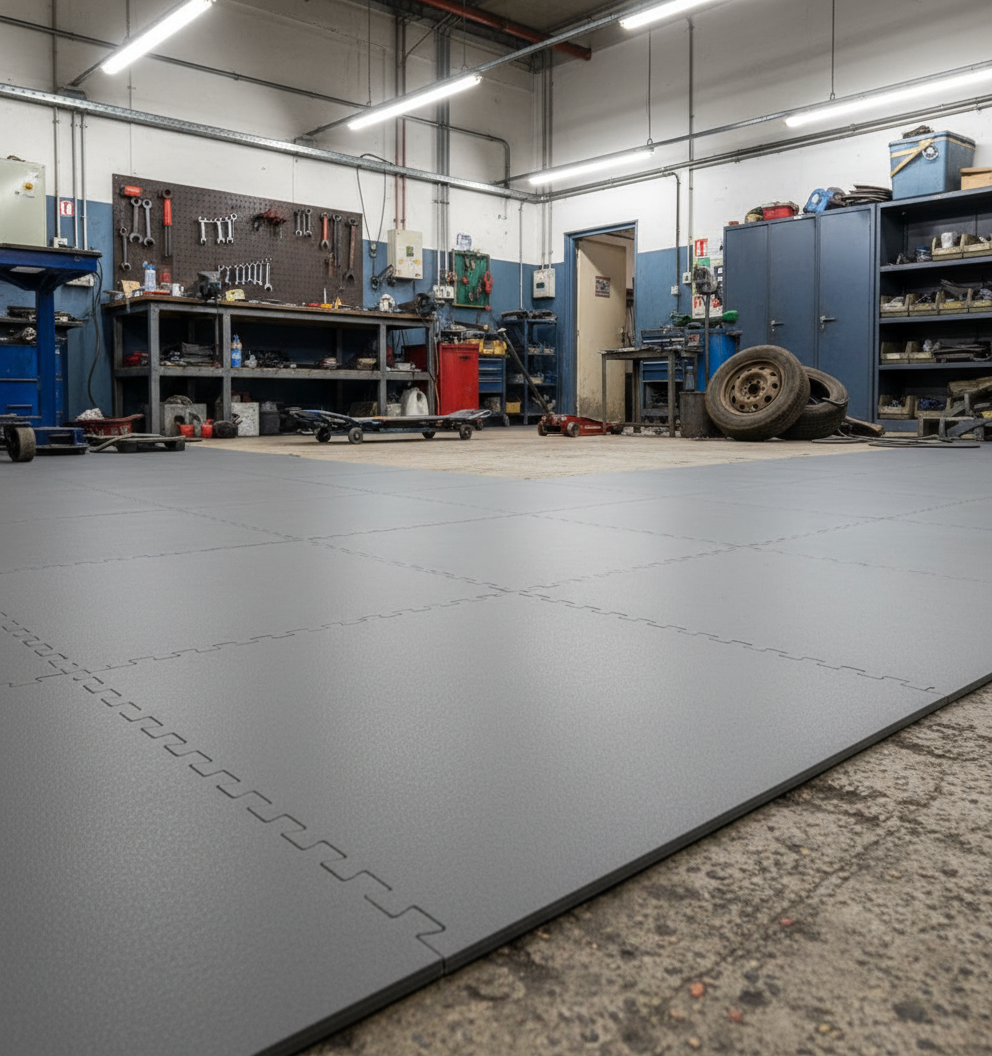 In Stock-20%
Industrial Concrete Cover Tiles - Damaged Floor Solution
GarageFlooringUK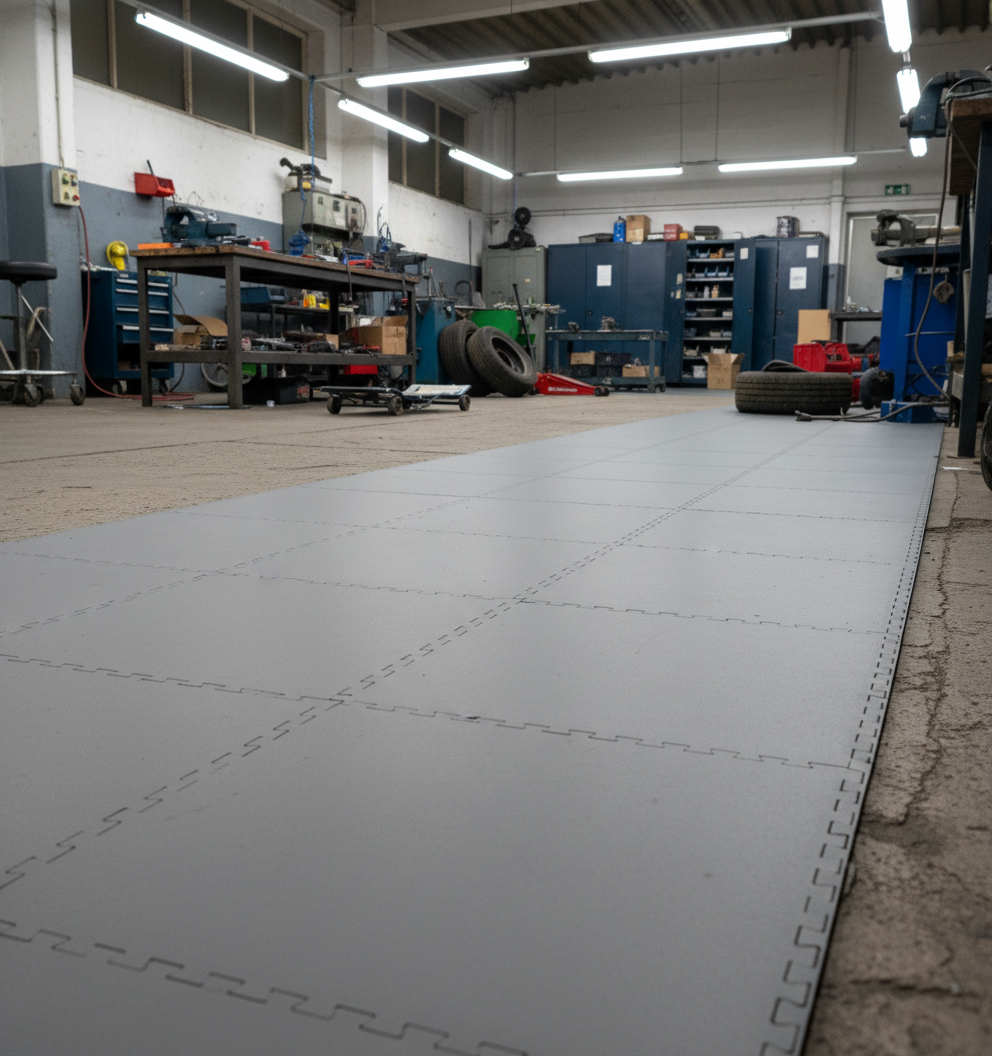 In Stock-20%
Concrete Floor Covering Tiles - Direct Overlay System
GarageFlooringUK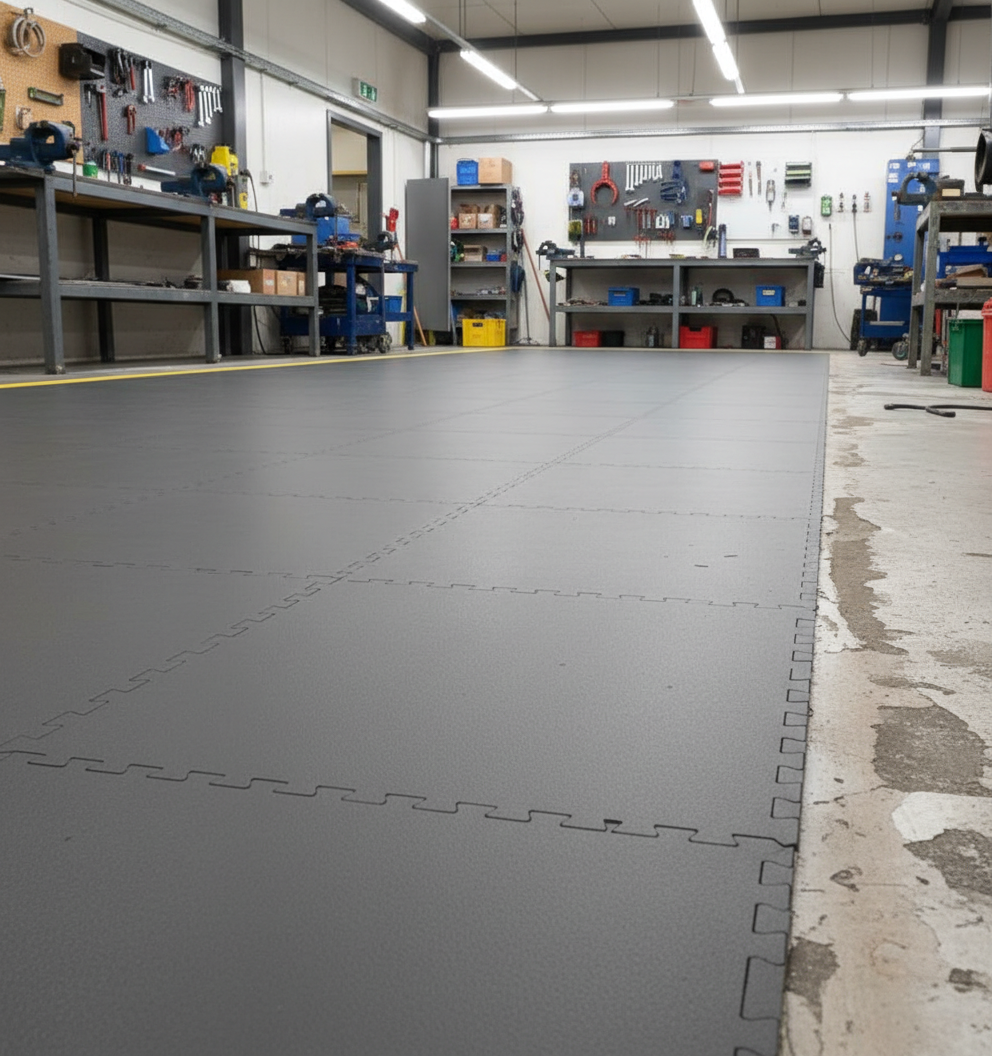 In Stock-20%